

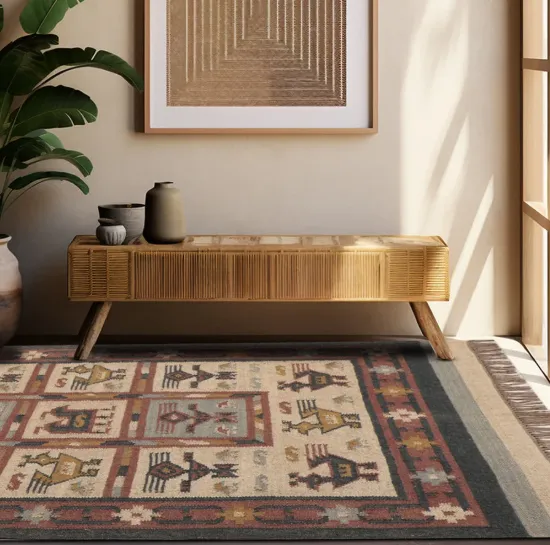
Walk into most modern Indian homes today and you’ll notice something interesting.
The walls have become cleaner. Furniture has become more minimal. Open kitchens flow into living spaces, dining areas merge into family rooms, and a single space now performs the job of three.
The result?
Homes look larger, but they don’t always feel organised. This is exactly why living area rugs have become more than decorative additions. They help define spaces without building walls, connect furniture into one visual story, and influence how people naturally move, gather, and spend time together. A thoughtfully chosen living area rug doesn’t just change how a room looks. It changes how the room works.
Why Are Living Area Rugs Becoming Essential In Modern Indian Homes?
Modern Indian homes are no longer divided into clearly separated rooms. Instead, one large living area often serves multiple purposes throughout the day. A living area rug helps organise that flexibility by creating visual boundaries.
Here’s how:
- It defines the main seating area, making sofas, accent chairs, and coffee tables feel intentionally connected instead of scattered across the floor.
- It separates functions without adding walls, allowing the living space, dining area, and reading corner to coexist naturally.
- It creates a visual pause between large marble or tiled floors, preventing the room from feeling too open or unfinished.
- It gives every zone a purpose, helping the eye understand where conversations happen, where people relax, and where movement should naturally flow.
For Indian apartments where space is valuable, a living area rug often becomes the simplest way to organise a room without changing its layout.
Which Living Area Rug Style Works Best For Your Home?
The best living area rug is not the one that follows trends. It is the one that reflects how you want your living space to feel, function, and welcome people.
Modern Living Area Rugs: For Homes That Prefer Calm Over Clutter
Choose a modern rug if your home already has clean architecture and simple furniture.
A modern living area rug works best when you want to:
- Create visual balance in rooms with bold furniture, statement lighting, or large windows.
- Let textures do the talking through subtle patterns, geometric designs, or tonal variations instead of busy prints.
- Keep the room feeling open by avoiding visual distractions in compact apartments or contemporary homes.
- Build around changing decor, as modern rugs adapt easily when furniture or accessories are updated.
Ideal for: Contemporary apartments, minimalist homes, Scandinavian-inspired interiors.
Traditional Living Area Rugs: For Homes That Tell Stories Through Craftsmanship
Traditional rugs bring visual richness without relying on temporary design trends.
Choose a traditional living area rug if you want to:
- Introduce heritage-inspired character through intricate motifs and timeless weaving traditions.
- Balance modern furniture by adding depth and craftsmanship to otherwise simple interiors.
- Create a welcoming atmosphere that naturally draws attention to the seating area.
- Own a piece that ages gracefully, often looking even more beautiful as it becomes part of everyday family life.
Ideal for: Classic Indian homes, wooden interiors, heritage-inspired spaces, collector homes.
Transitional Living Area Rugs: For Homes That Refuse To Choose One Style
Most Indian homes today are neither completely modern nor completely traditional. A transitional rug bridges both worlds effortlessly.
Choose one if you want to:
- Blend old and new furniture without making the room feel visually confused.
- Introduce pattern without overwhelming the space, using softened traditional motifs or contemporary reinterpretations.
- Future-proof your interiors, allowing the rug to work even as your furniture and décor evolve.
- Create a layered look that feels curated instead of decorated.
Ideal for: Urban apartments, evolving family homes, mixed-style interiors, luxury contemporary spaces.
The biggest mistake people make is choosing a handmade rug style because it is fashionable.
The better question is:
“Which rug style still feels like my home after the trends disappear?”
That decision almost always creates an interior that feels more authentic, more cohesive, and more enjoyable to live in.
What Makes A Living Area Rug Look Like It Belongs In The Room?
A beautiful handmade rug can still look completely out of place. The difference is rarely the area rug itself. It’s how well it connects with the room around it.
Use this four-point designer checklist before making a decision.
Does It Connect The Furniture?
A living area rug should visually unite the seating arrangement.
It should make:
- The sofa feel connected to the coffee table.
- Accent chairs feel included in the conversation area.
- The entire seating layout read as one composition.
Does It Respect The Scale Of The Room?
A rug should support the room’s proportions rather than compete with them.
Ask yourself:
- Does the rug feel proportional to the furniture?
- Does it leave a comfortable walking space?
- Does it visually anchor the seating area?
Does It Balance Existing Textures?
Modern Indian homes already include materials like:
- Marble
- Wood
- Glass
- Metal
- Fabric upholstery
A living area rug should introduce a texture that complements these surfaces instead of competing with them.
Does It Guide Movement Naturally?
A well-placed rug quietly tells people how to use a space.
It should help create:
- Clear conversation areas
- Comfortable walking paths
- Defined relaxation zones
- Natural transitions between different parts of the room
If movement feels effortless, the rug is doing its job.

